The Rundown
Topics: Stage Design, LED, Print | Published: January 2023 | 4 min read
Choosing a stage set design is harder than it used to be. Previously the set department's job was to combine projectors for slides with printed graphics for the logo and make it look a bit different.
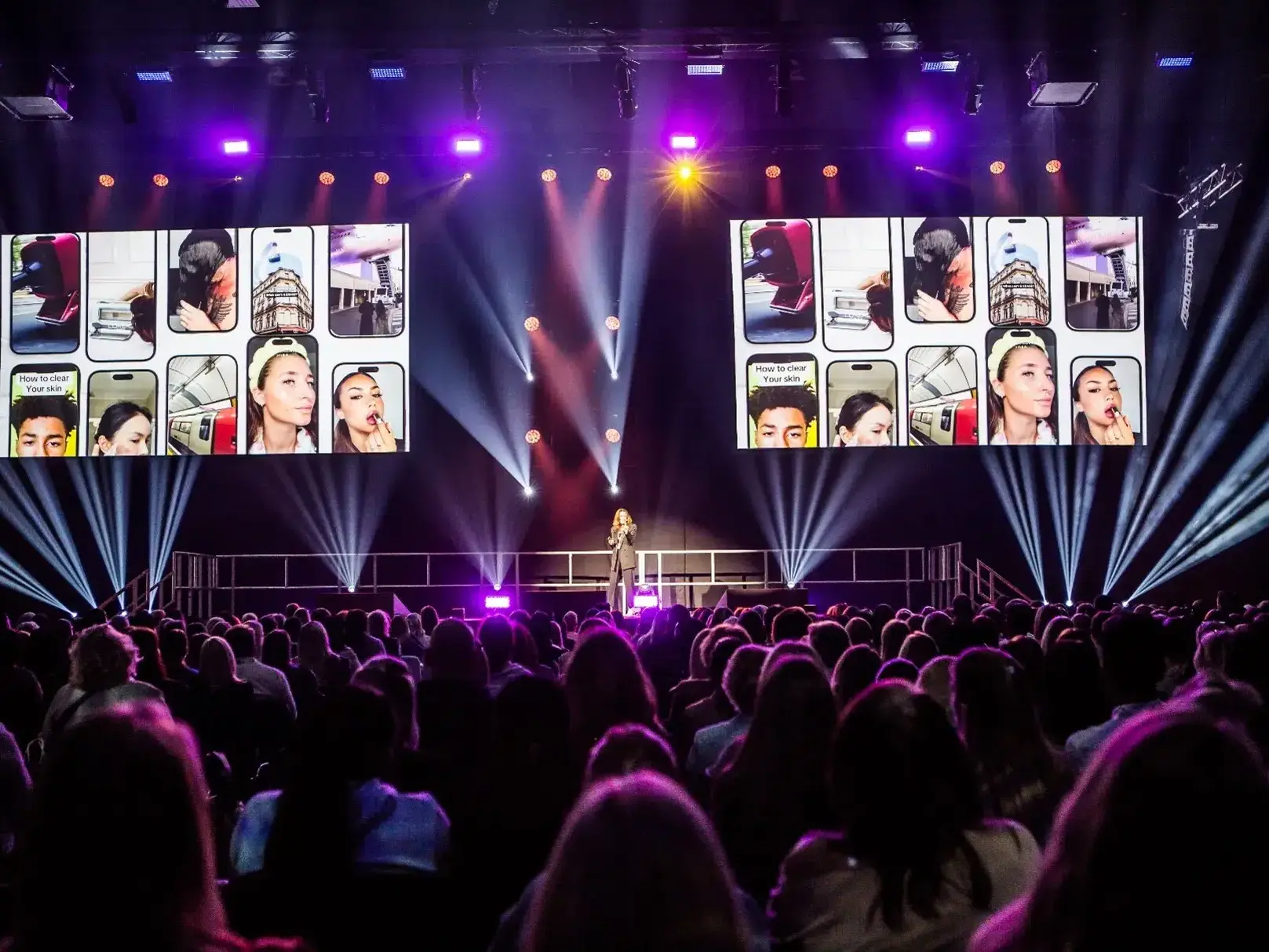
Digital content has changed that. Presentations have moved away from static slides towards richer, more interactive tools, which has made the LED video screen central to almost every designer's toolkit.
At the same time sustainability has become a genuine consideration rather than a footnote, so organisers now think much harder about virgin materials, bespoke set pieces and single-use print.
Both still have their place. Here is how they compare on cost, appearance, sustainability and practicality.
Cost and Appearance
Cost
You would be forgiven for assuming print wins outright. LED screens have a reputation for being expensive to hire, bulky to transport, and slow to install and derig - against print that rolls out from a single roll and goes up in an hour with two people.
In practice there are plenty of applications where LED is comparable or cheaper. As a rule, the larger the surface, the more cost-effective LED becomes relative to print.
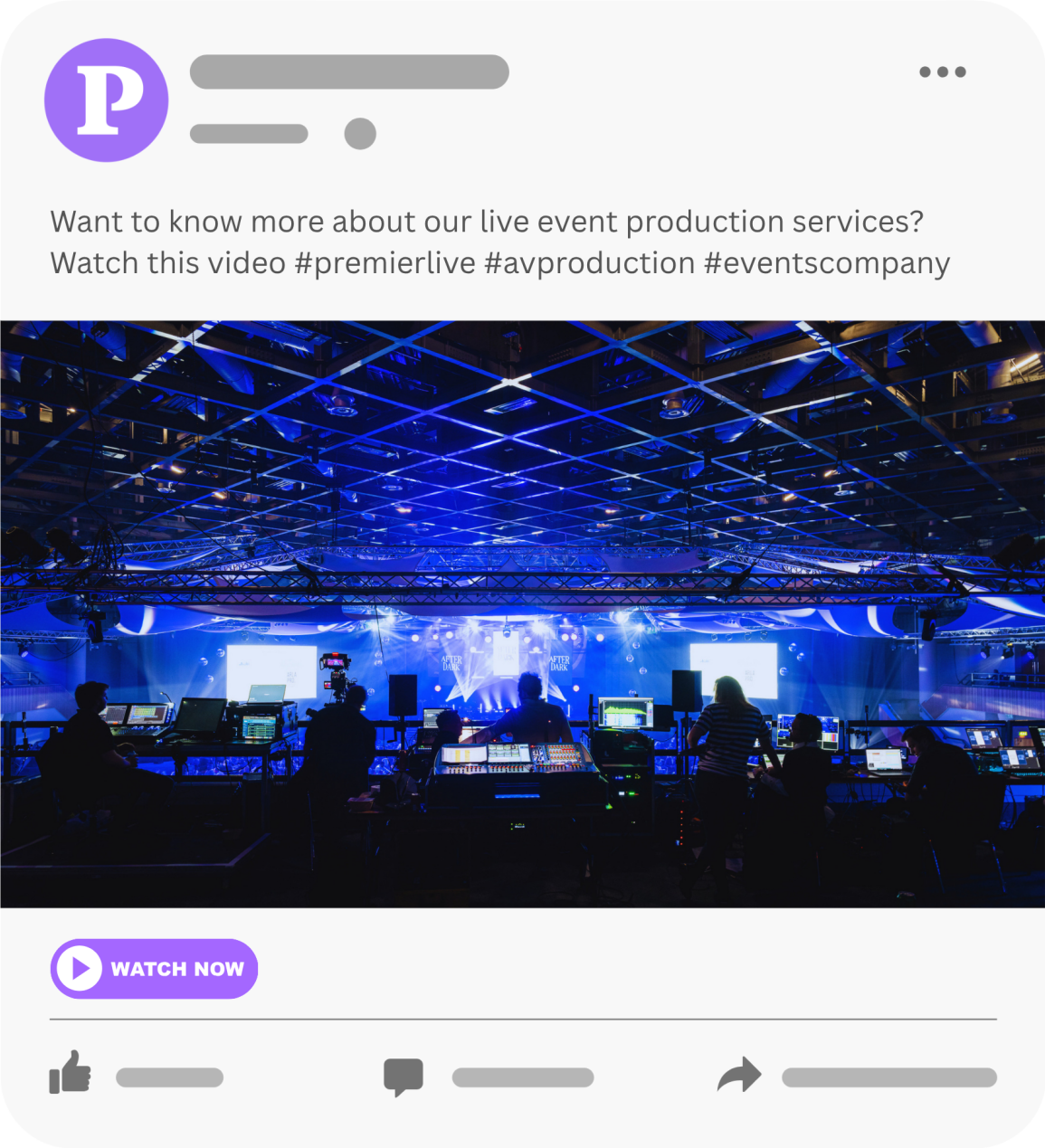
It also depends who you hire from. A production partner who owns their LED walls, as Premier Live does, has far more flexibility on hire price than they ever can on single-use print, which carries unavoidable material and production costs.
Appearance
Taste comes into it. Some prefer the crisp, flat, matte look of print; others prefer the vividness of LED.
LED's constraint is shape. Screens generally want rectangular or square-edged forms. That is fine for a standard backdrop, but creative designs run into physical limits - curves either become blocky steps or need a set piece to hide the edges.
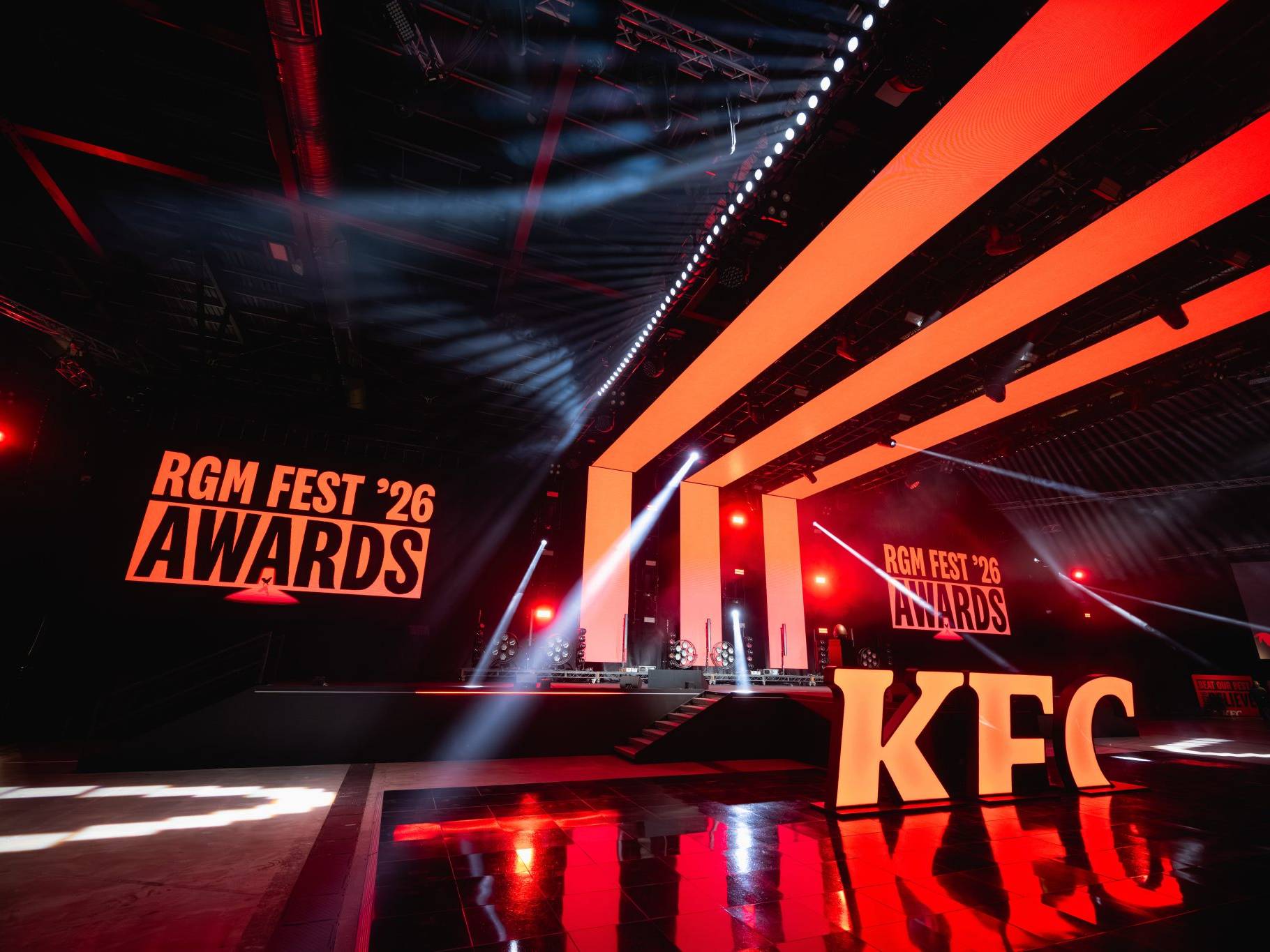
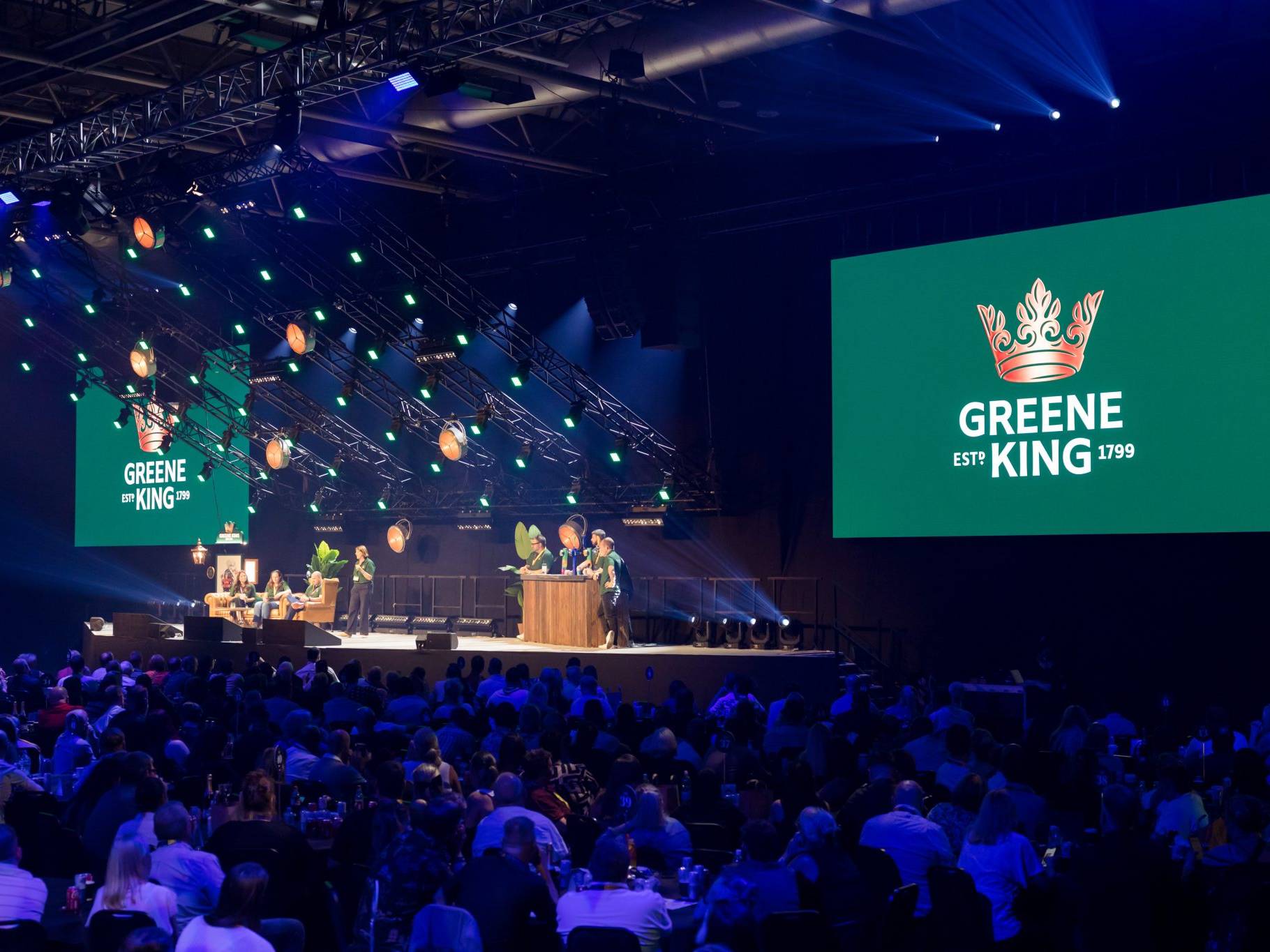
Where LED wins decisively is content. It displays video across its entire surface, and because it emits light rather than reflecting it, the visuals stay bold without additional fixtures pointed at them.
Sustainability
The Case Against Print
The impact of large-scale single-use print is hard to argue with. Even where it is made from recycled or recyclable material, print is difficult to dispose of both cost-effectively and responsibly.
Most of it is used once. That is the fundamental problem, and no amount of material specification fully solves it.
The Case For It
Print does have a smaller transport footprint over long distances, and the energy needed to display it is considerably lower than an LED wall - even accounting for the lighting required to make it look good.
For an event a long way from its supplier, that difference is not trivial.
Where It Lands
Design, manufacturing technique and transport miles all shift the answer, so there is no universal winner.
As a general rule, if you are working with a relatively local production supplier with sound sustainability credentials, video screen comes out ahead of print.
The other factor worth weighing is reuse. An LED wall works for years across hundreds of events. A printed backdrop generally works once, for one client, with one logo on it.
Practicality
Installation
There are real logistical and safety considerations here, and this is where impartial production advice earns its keep.
Print can be surprisingly difficult to install so it looks perfect every time - creases, tension and alignment all show under stage lighting. LED requires more technical knowledge to install, but once set up it is consistently flat and consistently good-looking.
Structure and Safety
Print is lighter and needs less structure behind it.
LED walls, though heavier, generally come with standardised rigging methods and risk assessments, which removes a lot of the grey area from a design. That matters more than it sounds when a venue is signing off your build.
Changing Your Mind
This is the argument that decides it for many organisers.
LED takes more crew to build. But if your print is wrong, you reprint the entire graphic and potentially lose hours or days waiting for it. On an LED wall, content is adjusted in seconds.
For any event where content might change late - and most do - that flexibility is worth a great deal.
Or Both
A blended approach often works well, using print for the structural and branded elements and LED for the content surface.
Premier Live owns its LED wall systems and has large-format printing available. Get in touch and we will give you an honest view on which suits your project.
Tell us about your event.
Fill in the form and we'll come back to you quickly, not with a generic auto-reply, but with something useful.
Prefer a call? Book a 20-minute discovery call at a time that suits you.
Rather email? info@premier-ltd.com. Or just ring us: 0116 202 9953.
Once we hear from you, we'll set up a quick call to understand your brief properly, no lengthy questionnaires, no sales pitch.
We typically respond within two hours on working days.
EXPERIENCED. DEPENDABLE. HANDS-ON. UNFLAPPABLE
The people behind Premier Live
These are our people - the production managers, technicians, show-callers and crew who plan your event and run the room on the night. The same team from first site visit to final cue.





















What We've Been Up To.
A look at the events we've delivered, the brief, the build, and how it ran on the night. Worth a read.