The Rundown
Topics: Video Screens, LED Technology | 1 min read
Static billboards have given way to something far more flexible: the video screen. It is now the default surface for content at almost every scale of event.
The transition from printed graphic to moving image rests on one fundamental element - the pixel. Every video image, whether on a phone, a television or a stadium display, is composed of them.
Understanding how those pixels are arranged explains almost everything about how event screens are specified, including the terminology that sounds impenetrable at first.
Here is what a pixel actually contains, what the P number means, and why viewing distance decides which screen you need.
Pixels and Pitch
The Building Block
Every video image is made from pixels. On an event LED wall those pixels are physically separate points on a panel, rather than the microscopic elements of a phone display.
What P6 Means
Event screens are described by pixel pitch - the distance between the centre of one pixel and the next.
A P6 wall, a common choice for events, has pixels positioned 6mm apart. A P3 has them 3mm apart, and so on.
The lower the number, the closer together the pixels, and the finer the image.
Inside Each Pixel
Within every pixel sits a trio of tiny LEDs - one red, one green and one blue.
By varying the brightness of those three, virtually any colour can be produced. All three at full brightness produces white.
That RGB combination is the entire palette, and it is the same principle behind every colour display you have ever looked at.
Why Pitch Costs Money
A P3 panel contains four times as many pixels as a P6 panel of the same size, and therefore four times the LEDs, drivers and processing.
That is why pitch drives price more than physical dimensions do.
Viewing Distance
Where Pixels Disappear
Stand close to an LED wall and the individual pixels are clearly visible as separate points of light.
Step back and they begin to merge. Each pixel's LEDs work together, and the further away you move, the less distinguishable they become - until the eye stops resolving them and simply perceives a single continuous image.
The Rule That Follows
Pixel size directly determines how far away someone needs to stand for the display to read as a coherent picture.
Large pixels need distance. Small pixels allow proximity.
This is the single most useful thing to understand when specifying a screen, because it means the right answer depends on the room rather than on the budget.
Applying It
A festival screen viewed from fifty metres can use a coarse pitch quite happily - nobody is close enough to resolve the gaps.
An exhibition stand where visitors stand a metre away needs a fine pitch, or the image falls apart precisely where people are looking at it.
Specifying a fine pitch for a distant audience is money spent on detail nobody can see.
Building at Scale
Modularity
Large pixels arranged across modular panels allow expansive displays to be built from standard components.
Panels lock together into whatever size and shape the design requires, which is what makes LED so much more flexible than a fixed screen.
What That Enables
Because the wall is assembled rather than manufactured to size, it can be built to unusual proportions - ultra-wide, portrait, stacked, or curved where the panels allow it.
Very few other display technologies offer that.
The Practical Constraints
Scale brings weight, power and rigging requirements, and those grow faster than the surface area does.
A screen twice the size needs roughly twice the panels, twice the power and considerably more thought about how it is supported.
Those questions are worth raising with the venue before the design is finalised rather than after.
Where It Is Heading
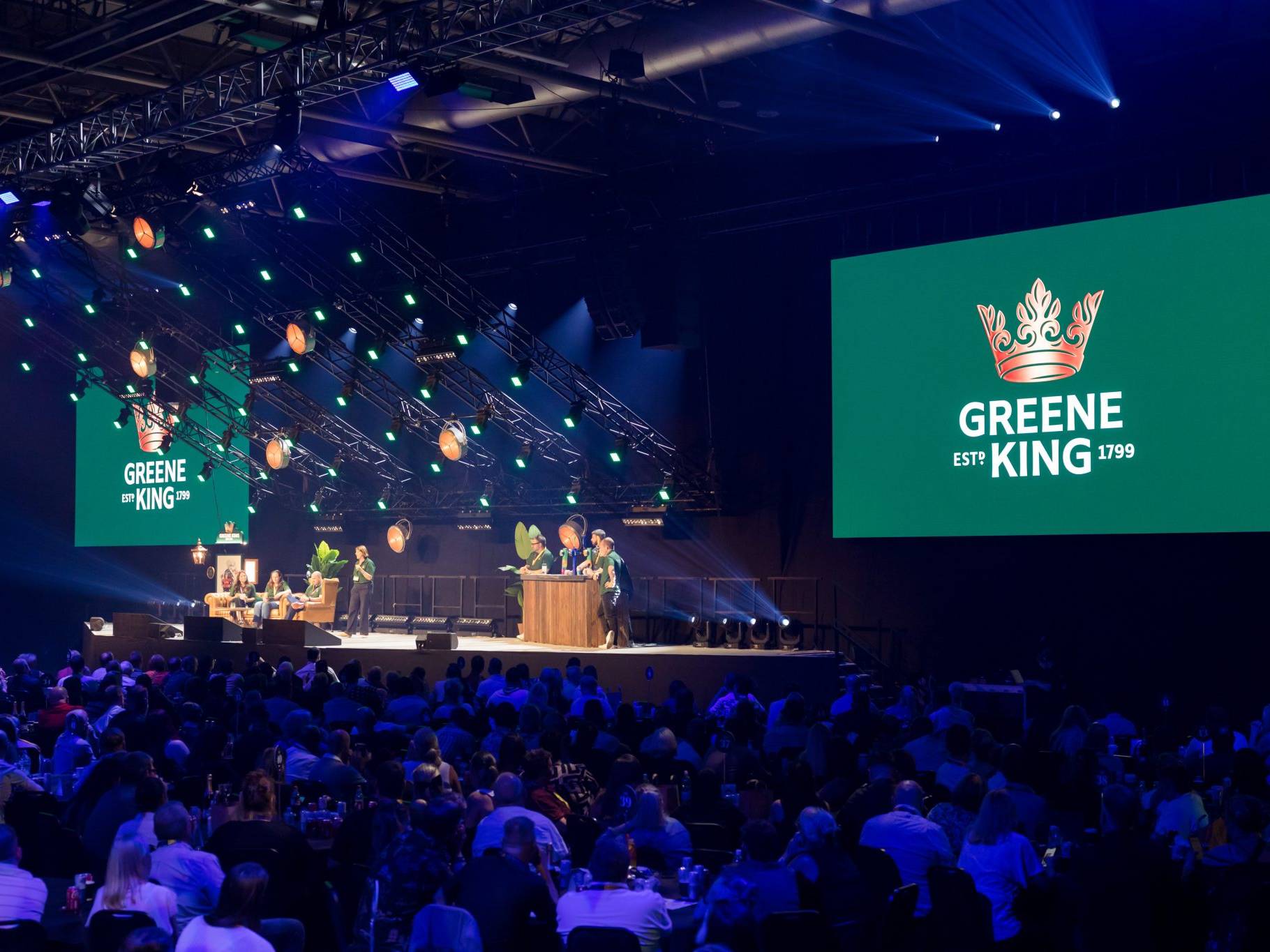
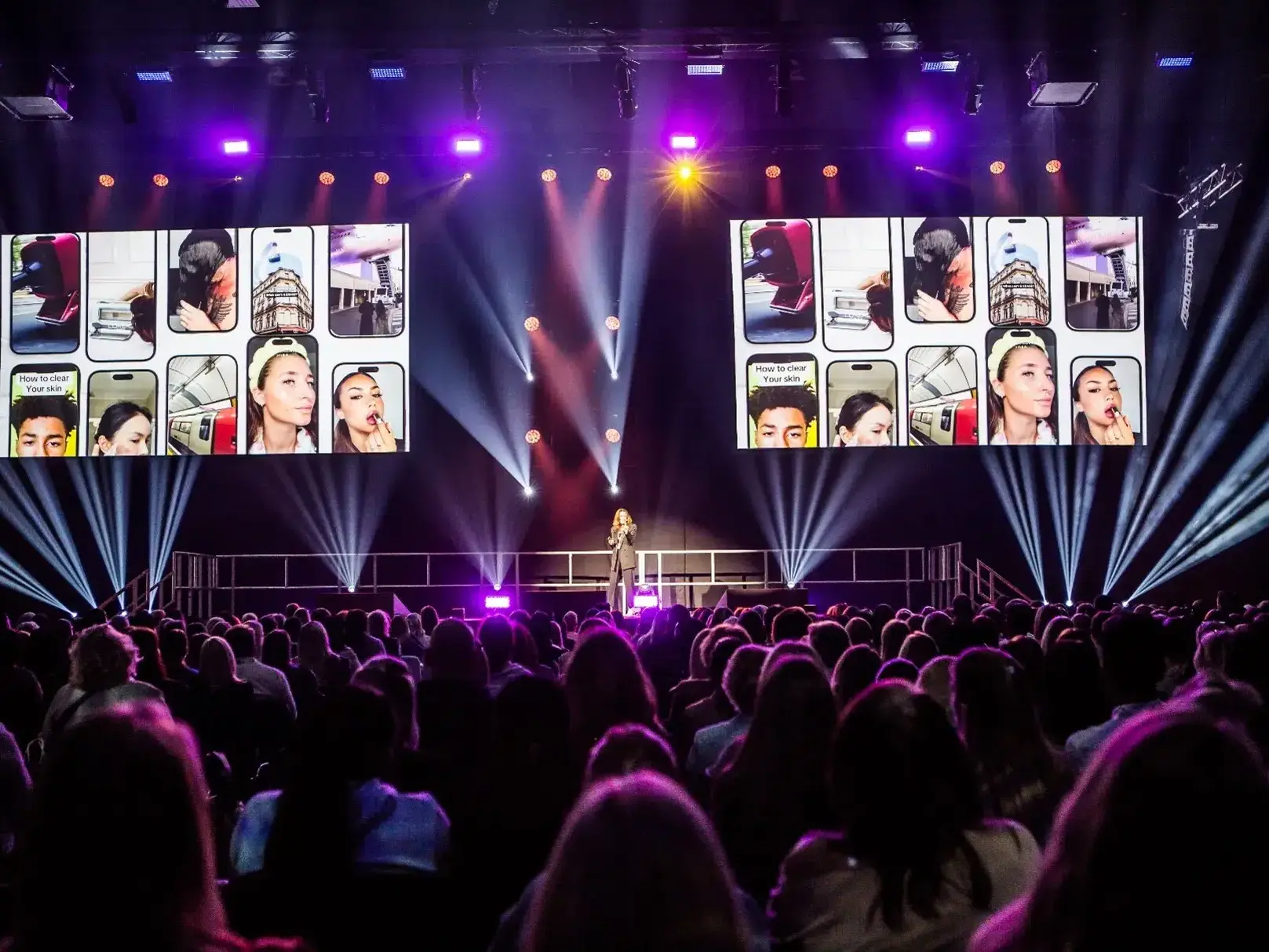
As pixel pitches continue to fall and costs come down, screens that were once festival-only are now realistic for conferences and exhibitions.
The practical ceiling on what can be built keeps rising.
For advice on the right screen for your event, talk to Premier Live on 0116 202 9953 or info@premier-ltd.com.
Tell us about your event.
Fill in the form and we'll come back to you quickly, not with a generic auto-reply, but with something useful.
Prefer a call? Book a 20-minute discovery call at a time that suits you.
Rather email? info@premier-ltd.com. Or just ring us: 0116 202 9953.
Once we hear from you, we'll set up a quick call to understand your brief properly, no lengthy questionnaires, no sales pitch.
We typically respond within two hours on working days.
EXPERIENCED. DEPENDABLE. HANDS-ON. UNFLAPPABLE
The people behind Premier Live
These are our people - the production managers, technicians, show-callers and crew who plan your event and run the room on the night. The same team from first site visit to final cue.






















What We've Been Up To.
A look at the events we've delivered, the brief, the build, and how it ran on the night. Worth a read.