The Rundown
Topics: Holograms, Event Technology | 3 min read
Since Tupac took the stage from the afterlife at Coachella in 2012, people have been asking about holograms for events.
The idea has a long history. From Star Trek onwards, images floating in mid-air have captured imaginations - and the request comes up constantly in event briefs.
We still cannot make an image materialise in genuinely thin air. But several technologies now produce a convincing hologram-like effect, and in the right application they genuinely astonish an audience.
Here are the four main approaches, what each does well, and the trade-offs that decide which suits your event.
HOLOX and Pepper's Ghost
HOLOX
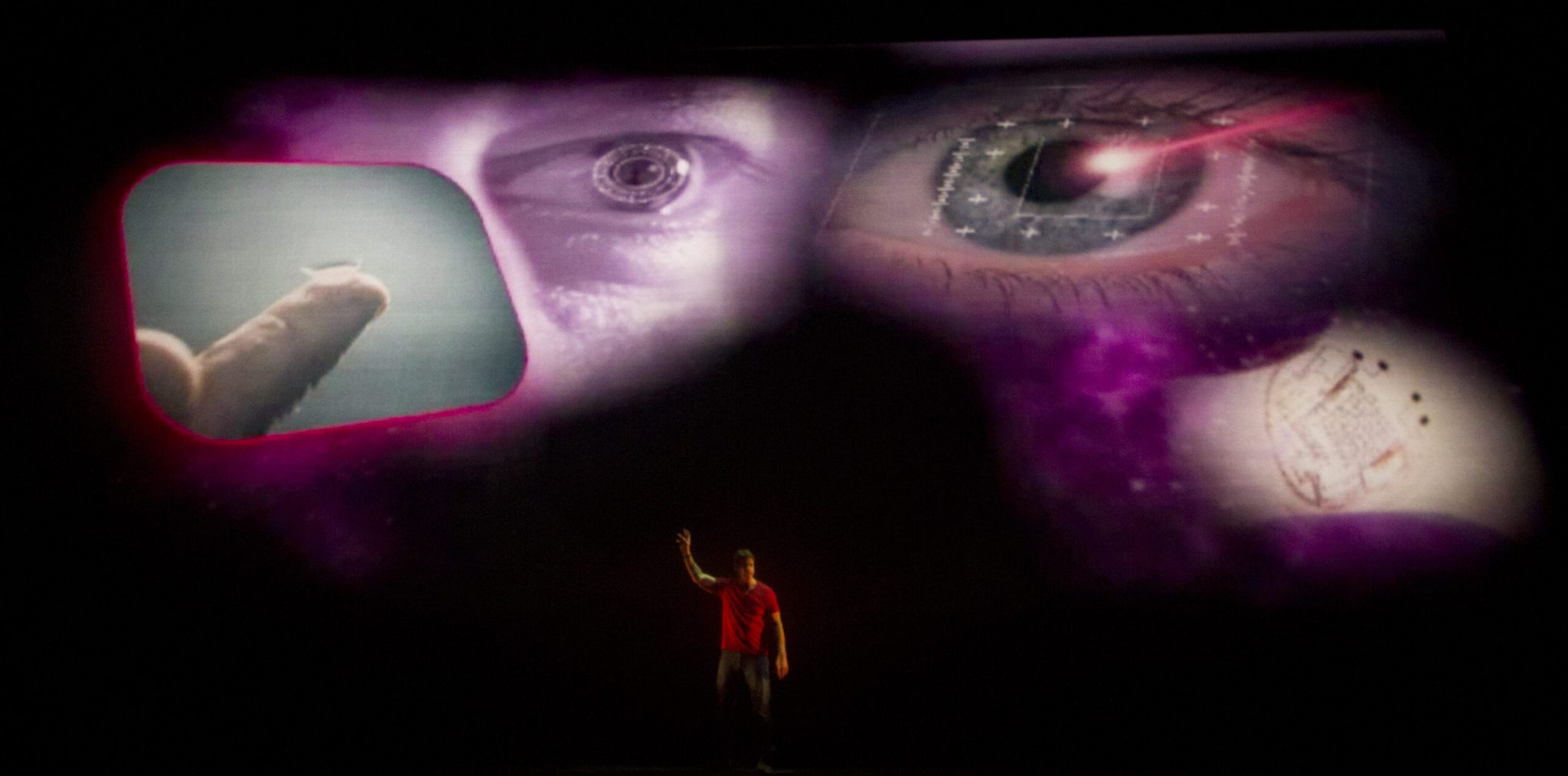
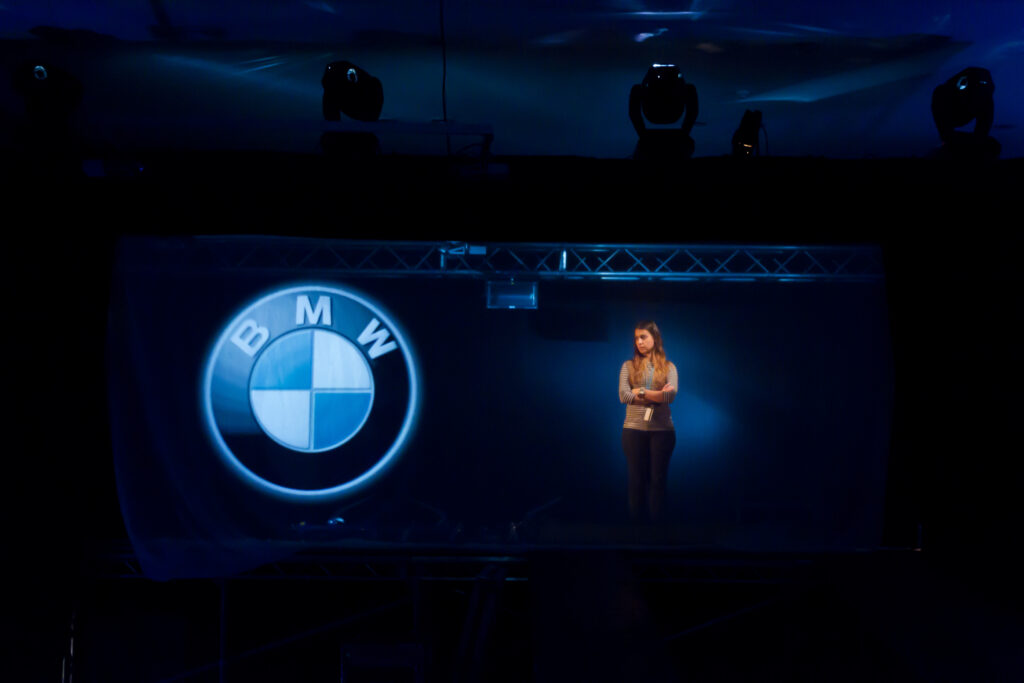
HOLOX uses a fabric woven from highly reflective translucent thread to create an almost invisible projection screen.
In relatively dark conditions the gauze cannot be seen at all. The moment light is directed at it from a projector, it becomes instantly reflective and the image appears to float.
It depends on tightly controlled lighting levels, and on a space and production designed around the technology rather than adapted to it.
Done properly it is one of the most convincing hologram effects available for live events. It has been used in theatre productions, product launches, conferences and awards ceremonies.
Pepper's Ghost
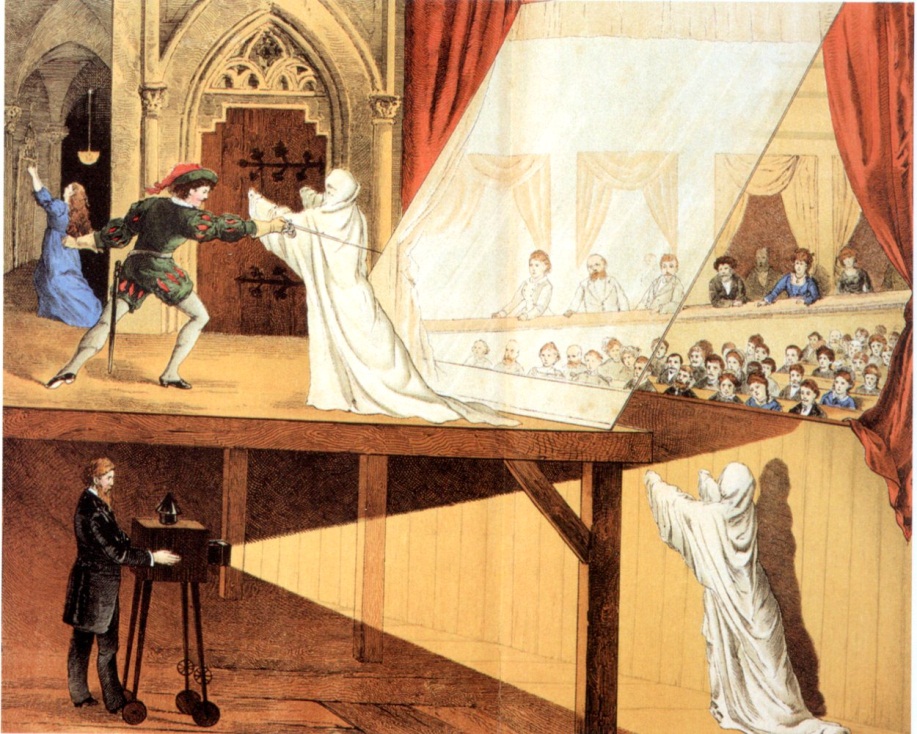
An older variation on the same principles, and one of the oldest illusions in theatre.
Clear acrylic or glass is set at a 45-degree angle to create a near-invisible panel, reflecting a projection from directly below. It is the same principle that makes autocue work.
The effect is highly convincing. The drawbacks are cost and space - it needs a very large stage area to be effective, which limits it in practice to large-scale theatre productions.
Fans and Boxes
Hologram Fans
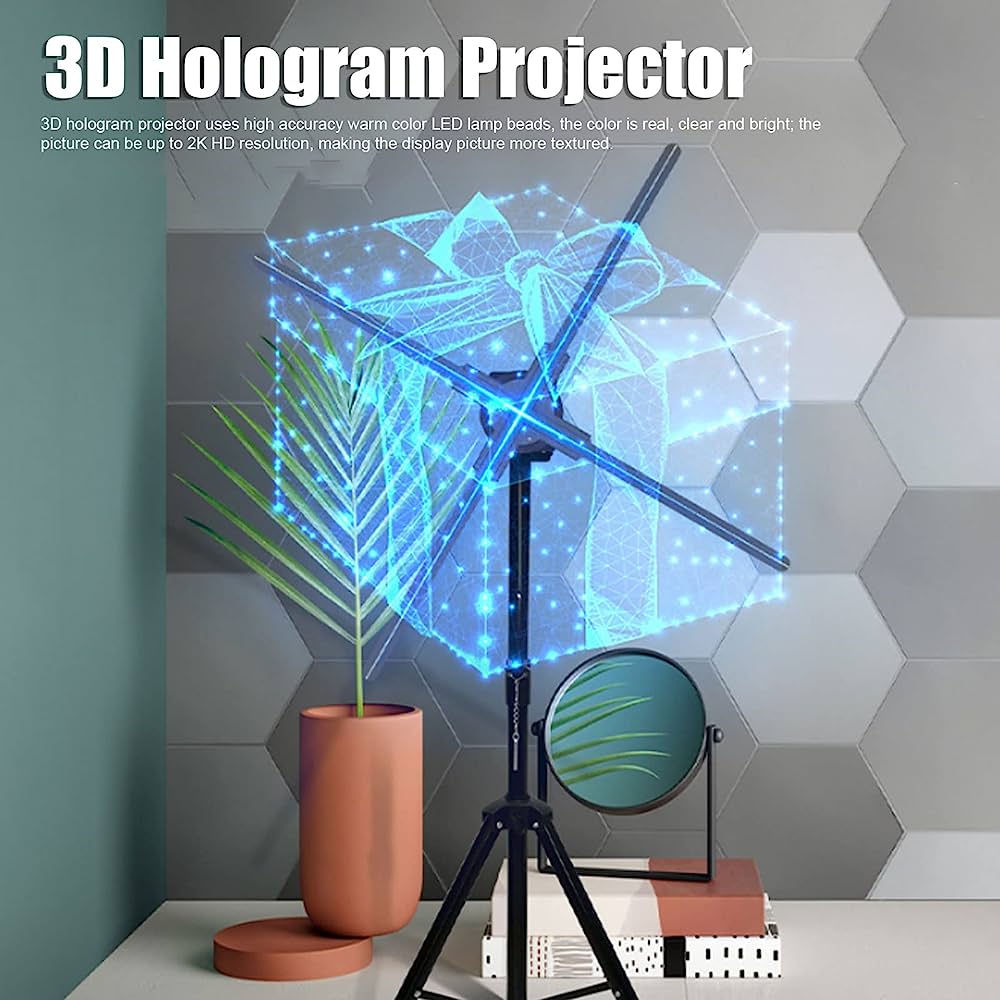
Hologram fans use fast-spinning blades fitted with programmable LEDs.
They are the only effect here that does not rely on reflection, which means they can be genuinely bright and work in far less controlled lighting.
The compromises are practical. They are noisy and move air, so they usually end up inside a box or behind a window to contain that - which undercuts the illusion. The blades are also often visible while spinning, making the effect less convincing than the reflective techniques.
As a low-cost conversation starter on a stand, they work well. As a centrepiece, less so.
Hologram Box
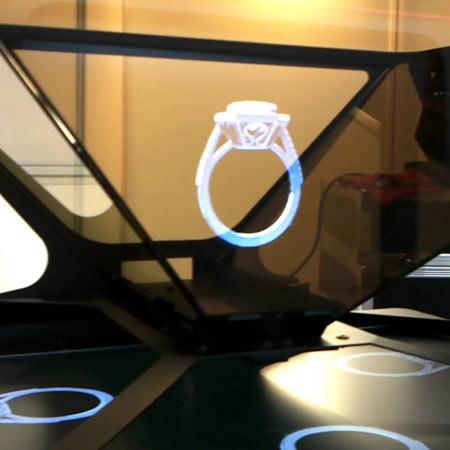
A hologram box uses angled acrylic with a projection from below, producing an image that appears to float inside a glass case.
It is excellent for exhibition stands and shop windows. Done well it holds up in daylight, and it can be viewed from several angles without the illusion breaking.
It is also considerably more cost-effective than the large-scale techniques.
The limitations: the box itself is always visible, and viewers can break the illusion if they can see the projection source from above or below. It also works poorly as a stage technique, because the glass reflects stage lighting.
Choosing One
Start With the Room
The deciding factor is almost always lighting control.
HOLOX and Pepper's Ghost need darkness to disappear. If you cannot control the ambient light - a daytime exhibition hall, a marquee, a room with windows - neither will convince.
Fans and boxes tolerate light far better, which is why they dominate exhibition stands.
Then the Viewing Angle
Consider where the audience will be.
A seated audience facing one direction suits the reflective techniques. People circulating freely around a stand will find the edges of a box or the blades of a fan, so plan sightlines accordingly.
Then the Content
A hologram is only as good as what appears in it. Footage shot against black, with the subject lit to match the intended environment, is what sells the effect.
Content produced as an afterthought is the most common reason these installations disappoint.
Be Realistic About Scale
The Coachella effect was a large-scale Pepper's Ghost with a substantial budget and a stage built around it.
Most event applications are more modest, and are better for choosing a technique that suits the space rather than chasing that particular reference.
Talk to Us
Premier Live has delivered holograms for product launches, conferences and outdoor illuminations. Get in touch on 0116 202 9953 or info@premier-ltd.com.
Tell us about your event.
Fill in the form and we'll come back to you quickly, not with a generic auto-reply, but with something useful.
Prefer a call? Book a 20-minute discovery call at a time that suits you.
Rather email? info@premier-ltd.com. Or just ring us: 0116 202 9953.
Once we hear from you, we'll set up a quick call to understand your brief properly, no lengthy questionnaires, no sales pitch.
We typically respond within two hours on working days.
EXPERIENCED. DEPENDABLE. HANDS-ON. UNFLAPPABLE
The people behind Premier Live
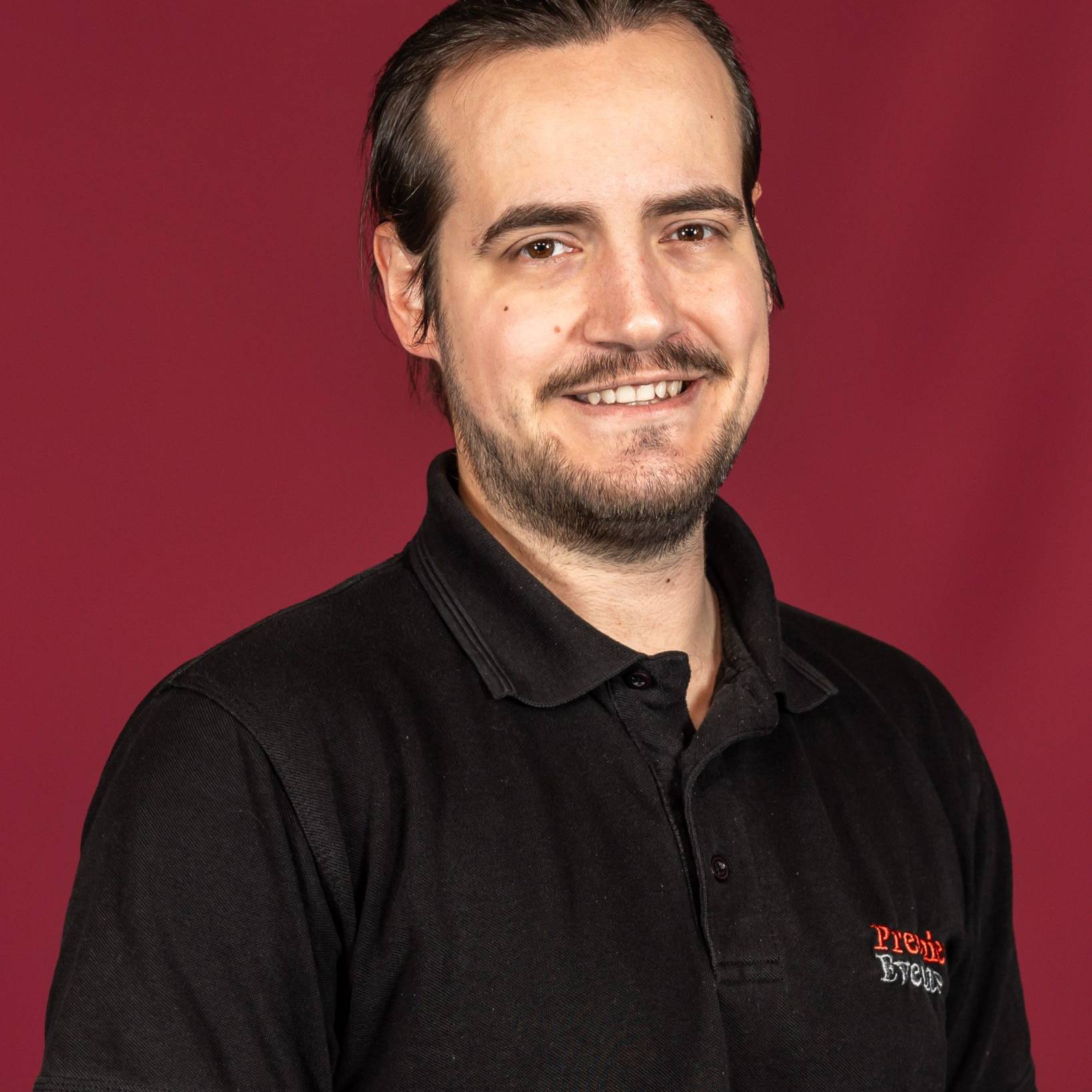
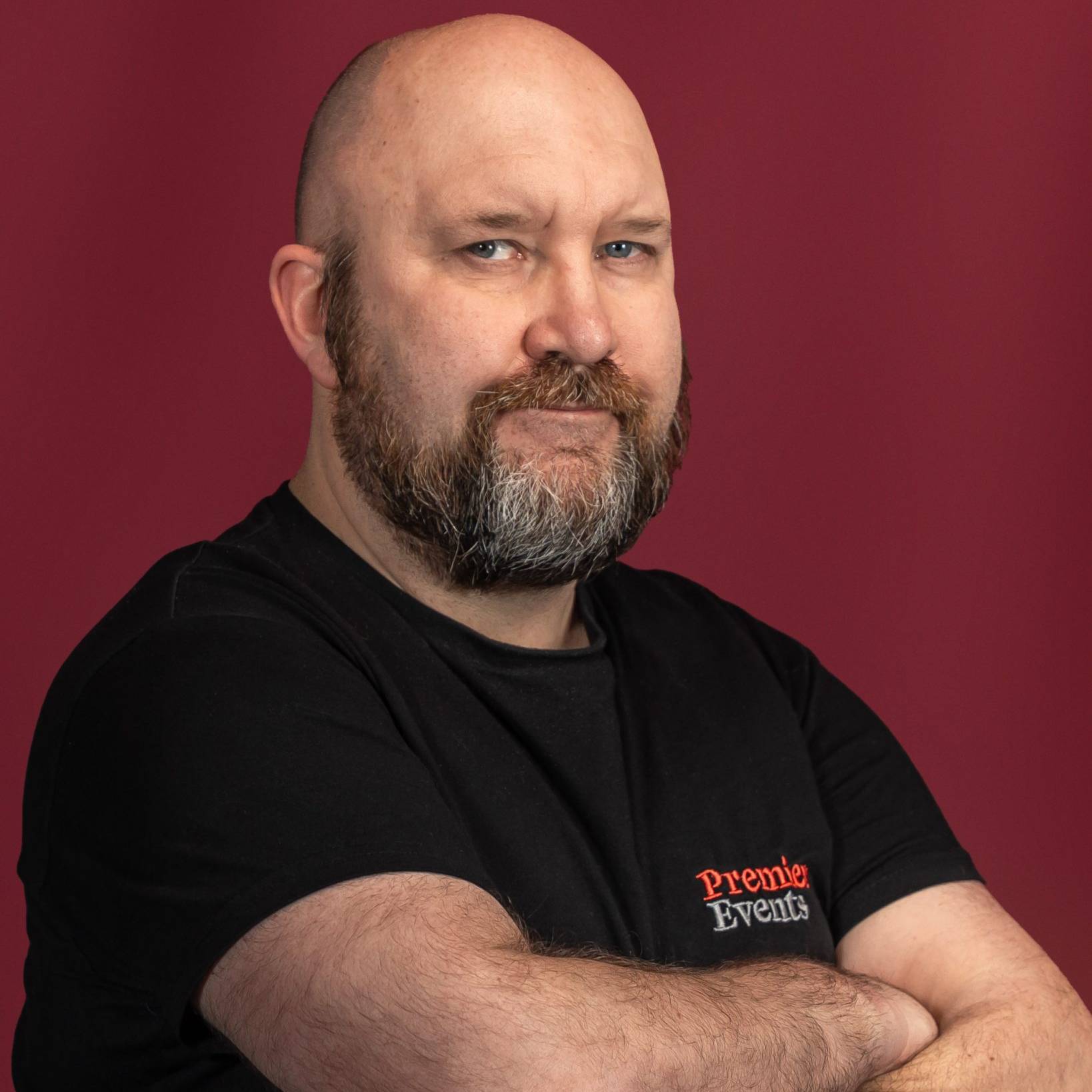
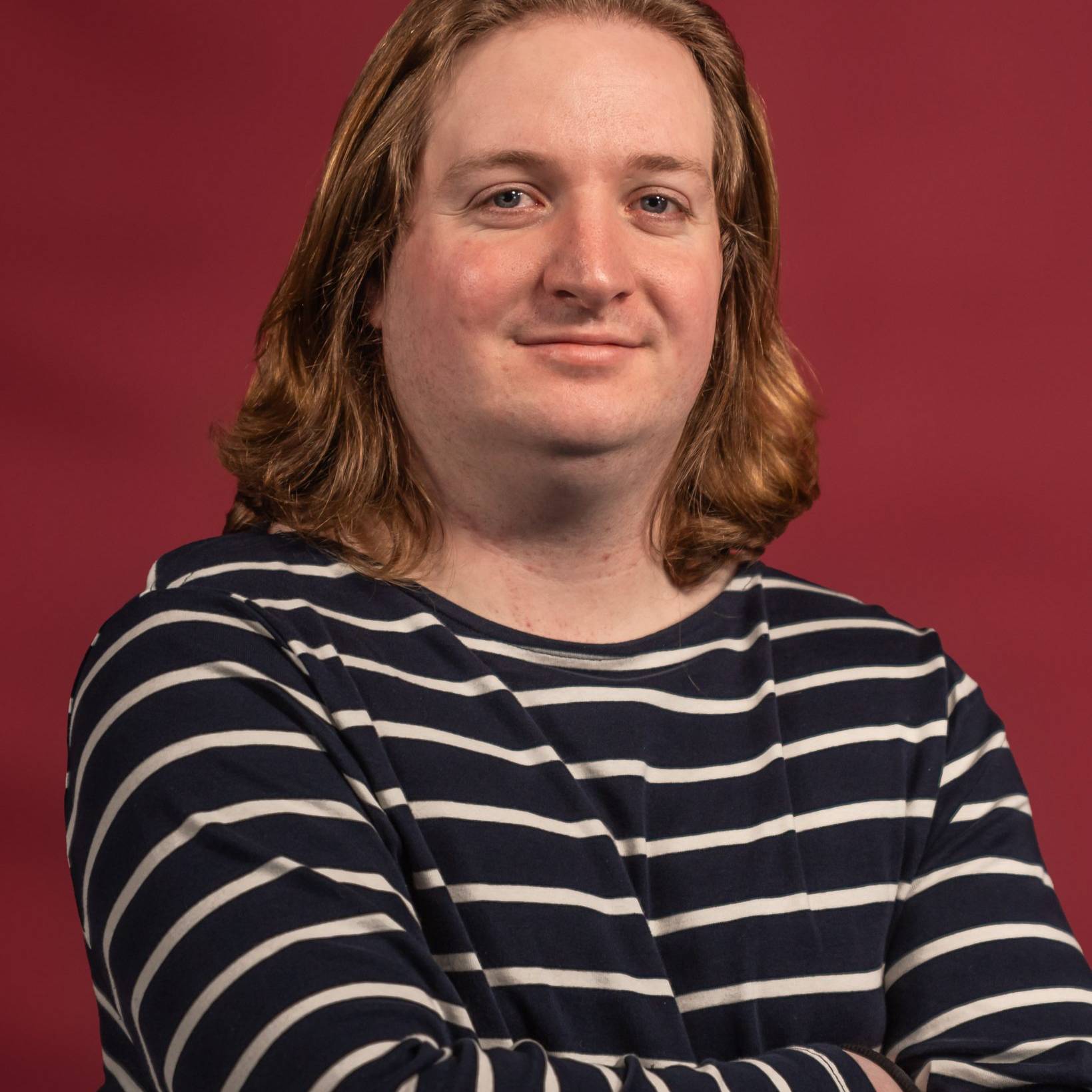
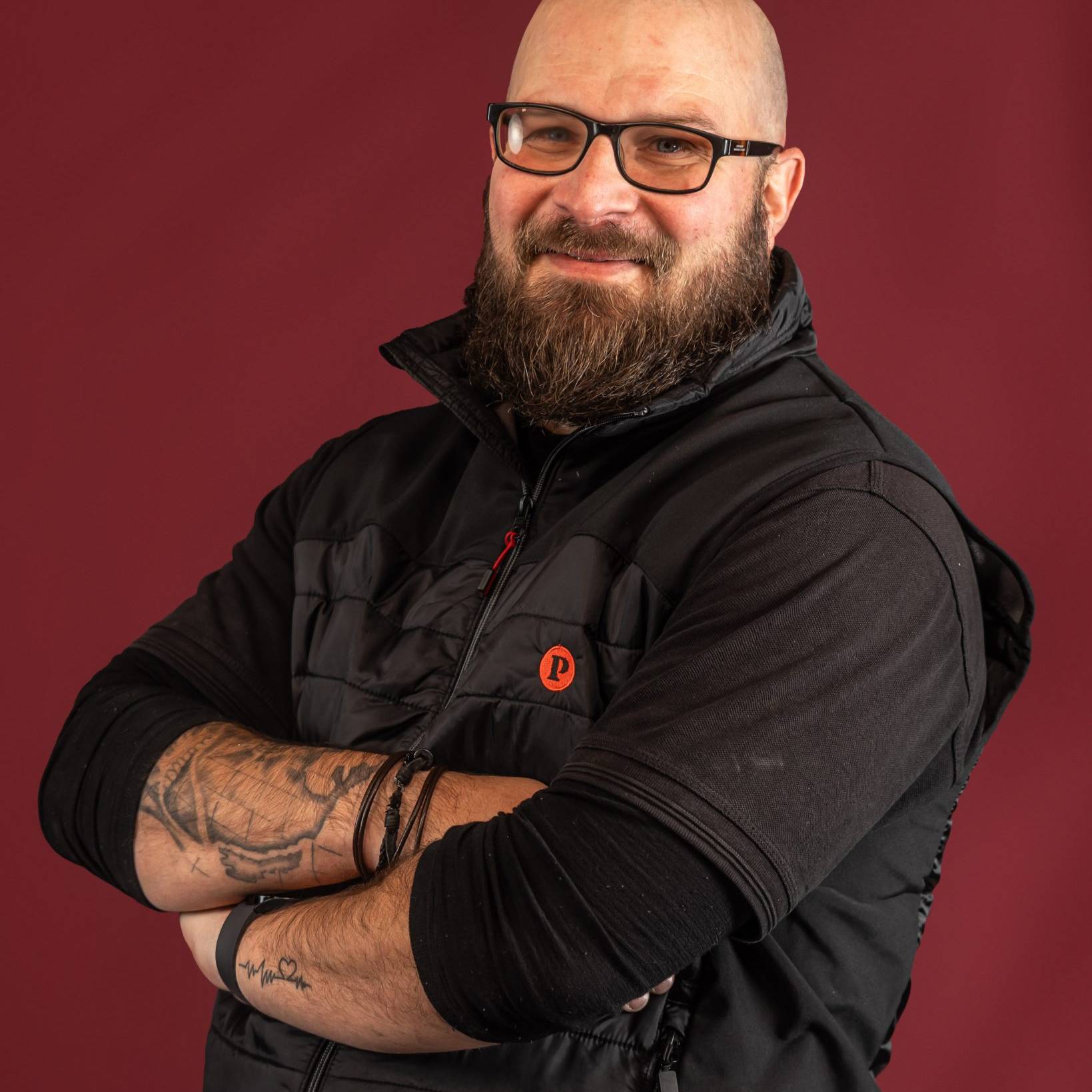
These are our people - the production managers, technicians, show-callers and crew who plan your event and run the room on the night. The same team from first site visit to final cue.


















What We've Been Up To.
A look at the events we've delivered, the brief, the build, and how it ran on the night. Worth a read.