The Rundown
Topics: Cameras, Content Production | 1 min read
The lens does more to shape a final image than the camera body attached to it, which is why the choice matters more than most people assume.
Cinema lenses and consumer lenses are built for different jobs. One is made for controlled, repeatable work under professional conditions. The other is made to be light, affordable and easy to pick up.
Neither is better in the abstract. The right answer depends on how the footage will be used, who is operating the camera, and whether anyone needs to match shots across a shoot.
Here is how they differ on build, image, control and cost - and three consumer lenses worth the money.
Build, Image and Control
Build Quality
Cinema lenses are built to survive professional use. Higher grade materials and heavier construction mean they hold up in demanding environments, day after day, being handled by crew who are working quickly.
Consumer lenses are built for casual use. They are lighter and less rugged, with simplified features that make them easier to pick up and use without training.
On a live event, where kit gets moved, knocked and rigged in a hurry, that difference shows.
Image Quality
Cinema lenses are designed for accurate colour, precise focus and minimal distortion. They are also built to match each other, so footage from two lenses in the same set cuts together without correction.
Consumer lenses trade some of that away in exchange for being compact and affordable. For most purposes the difference is small. On a graded, multi-camera edit it becomes obvious.
Control
Cinema lenses offer more manual control - aperture, focus, and the mechanical feel to operate them smoothly on a shot. That gives an operator far more creative control, and makes repeatable focus pulls possible.
Consumer lenses lean on automatic controls, which makes them accessible but takes decisions out of the operator's hands. Autofocus hunting mid-shot is the usual consequence.
What It Costs
The Price Gap
Cinema lenses cost considerably more, and the gap is wider than most people expect before they look.
That reflects the materials, the mechanical precision and the manufacturing tolerances needed to make lenses that match one another. It is not a badge premium.
Which to Choose
If you need industry-standard quality and budget is not the constraint, a cinema lens is the answer.
If you are shooting casually, or capturing content around an event rather than producing a film, a consumer lens will serve you perfectly well - and the money is usually better spent on lighting and sound.
Hire Rather Than Buy
Cinema glass is one of the strongest cases for hiring. It holds its usefulness for years, it is expensive to own, and most organisations need it occasionally rather than constantly.
Hiring also means you can match a set to the specific job, rather than making one set of lenses cover every situation.
Lenses We Rate
Canon 70-200mm f2.8 L USM
Around 800 to 1,000 pounds.
A genuine multi-purpose lens and probably the most useful single piece of glass on this list. It handles portraits, sport, events and nature without complaint, and the constant f2.8 aperture means it keeps working as light drops.
For event photography, where you are often at the back of a room shooting a stage, this is the one that earns its place in the bag.
Sigma 24-70mm
Around 800 to 1,000 pounds.
A versatile standard zoom covering the range most work actually sits in. Events, landscape, photojournalism and commercial shoots are all comfortably within it.
If you were only taking two lenses to an event, this and the 70-200 would be the pair.
Canon EF-S 24mm f2.8 STM
Around 90 to 200 pounds.
A wide-angle prime that costs a fraction of the others and does something neither zoom can. Good for landscape, cityscape, street, interiors and environmental portraits.
Small, light, cheap, and the fastest way to make a room look like a space rather than a backdrop.
Talk to Premier Live about camera and lens hire for your next shoot.
Tell us about your event.
Fill in the form and we'll come back to you quickly, not with a generic auto-reply, but with something useful.
Prefer a call? Book a 20-minute discovery call at a time that suits you.
Rather email? info@premier-ltd.com. Or just ring us: 0116 202 9953.
Once we hear from you, we'll set up a quick call to understand your brief properly, no lengthy questionnaires, no sales pitch.
We typically respond within two hours on working days.
EXPERIENCED. DEPENDABLE. HANDS-ON. UNFLAPPABLE
The people behind Premier Live
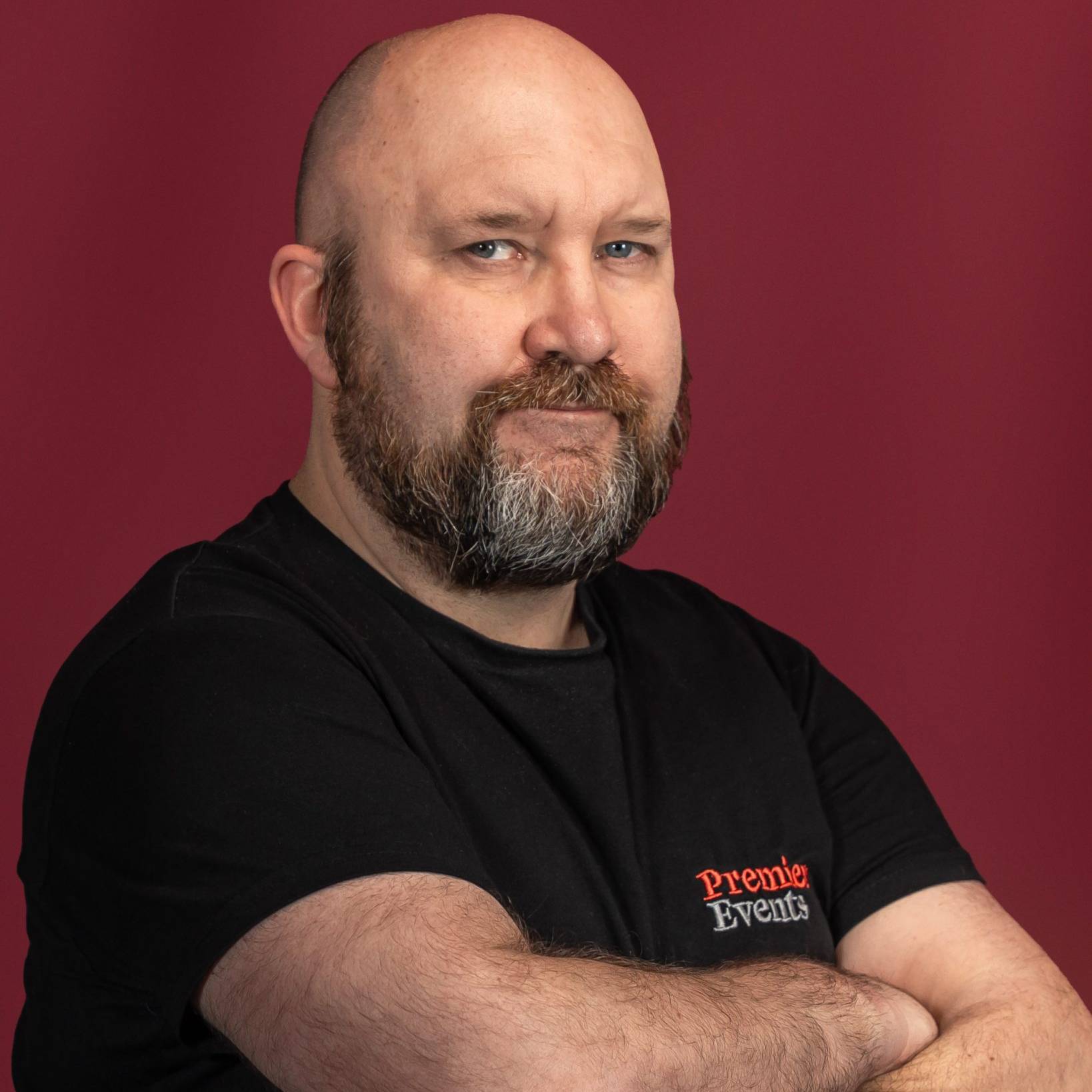
These are our people - the production managers, technicians, show-callers and crew who plan your event and run the room on the night. The same team from first site visit to final cue.























What We've Been Up To.
A look at the events we've delivered, the brief, the build, and how it ran on the night. Worth a read.