The Rundown
Topics: Acoustics, Soundproofing | Published: December 2023 | 5 min read
Acoustic treatment is vital to achieving good sound at an event or in a studio, and it starts with understanding what you are actually trying to fix.
There are four distinct acoustic problems: noise getting in, sound getting out, echo, and reverberation. They are not the same thing and they do not have the same solution.
All four come down to energy. Sound travels as pressure changes in the air, and treatment works by converting that pressure into microscopic movement within a material, where it becomes heat and dissipates.
Here are the four phenomena, the materials that deal with them, and why system design matters more than any of them.
The Four Problems
External Noise Ingress
Sound from outside getting in - traffic, music, tools, construction, general ambient noise.
This matters most when filming, recording voiceover, or running an event where quiet is part of the experience: a conference, or a wedding ceremony.
Internal Sound Transmission
Sound from inside getting out. Typically instruments or DJs amplified by a high-powered system.
You may want it loud inside. The people outside almost certainly do not. This is the central issue for live music, dance events, and corporate shows using loud musical stings for stage entrances.
Echo
Sound bouncing off a surface and reaching you a moment later - familiar from a valley or a large warehouse.
Echo colours sound and makes it harder to follow. With spoken word even a small amount makes an enormous difference, particularly for anyone hard of hearing or with reduced high-frequency perception, which declines in most people from the teenage years onward.
Reverberation
Like echo, except the reflected waves interact with one another.
Reverberation can be desirable - it adds timbre, which is why cathedrals sound the way they do. But those interactions make sound more complex and harder to interpret. We call that a loss of intelligibility, and for speech reinforcement intelligibility is everything.
Spaces with a lot of it are called acoustically live; those with little are acoustically dead.
Where the Sound Goes
Noise and Sound
Worth being precise about terms. Noise is any sound we do not want. Sound is what we do.
Every technique below is about absorbing the first without damaging the second.
What Absorption Actually Does
Sound travels as pressure changes in air - small shockwaves moving through it.
Rather than letting those pressure changes pass, absorbent materials convert them into microscopic movement within the material itself. That energy becomes heat and dissipates.
The quantities are tiny. You would never feel the warmth. But that is the mechanism.
A Note on Cathedrals
People assume cathedral acoustics are good. In fact those buildings were designed to maximise reflection, making sound as loud as possible for a congregation.
They had no amplification. Given modern equipment, the same architects would almost certainly have built something far more acoustically dead.
It is a useful reminder that reverberation was a workaround, not an ideal.
One Mechanism, Four Uses
Sound trying to get in is absorbed. Sound trying to get out is absorbed. Sound that would echo is absorbed. Sound that would reverberate is absorbed.
All four problems, one underlying principle.
Methods and Design
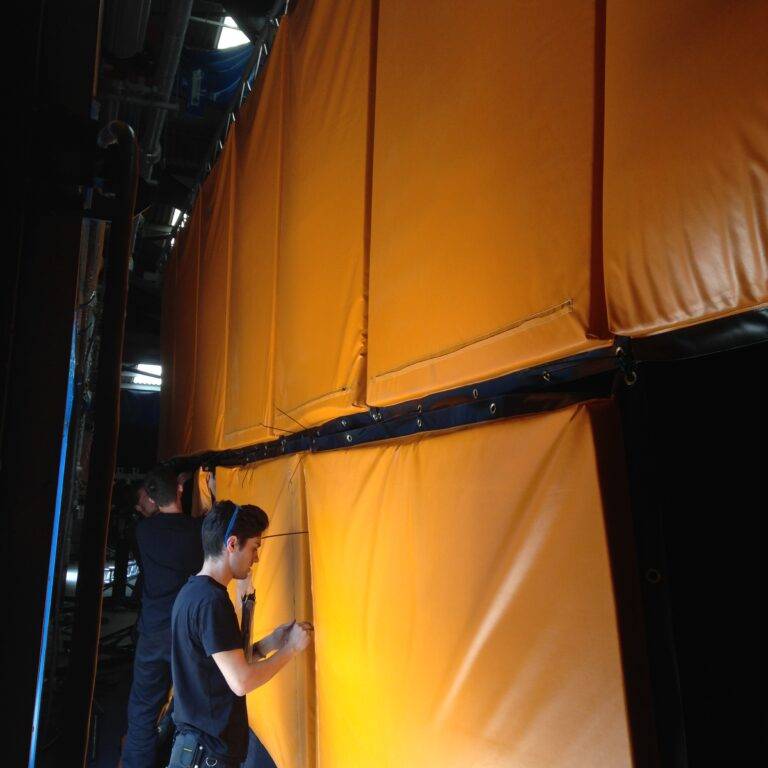
Black Wool Serge
A heavy drape product, and our most-used tool. Premier Live holds thousands of square metres of it.
It rigs relatively easily - from truss, catenary lines, existing rigging or softscene - and absorbs mid and high frequencies very effectively.
Two or three layers spaced apart can create a room within a room, enough to prevent transmission between adjacent conference spaces.
We have also used it in aircraft hangars, warehouses and tunnels to reduce reflections, and in arena venues to control slap-back echo.
BLOKKA Panels
Our own product, developed specifically to prevent sound escaping a space - the internal transmission problem.
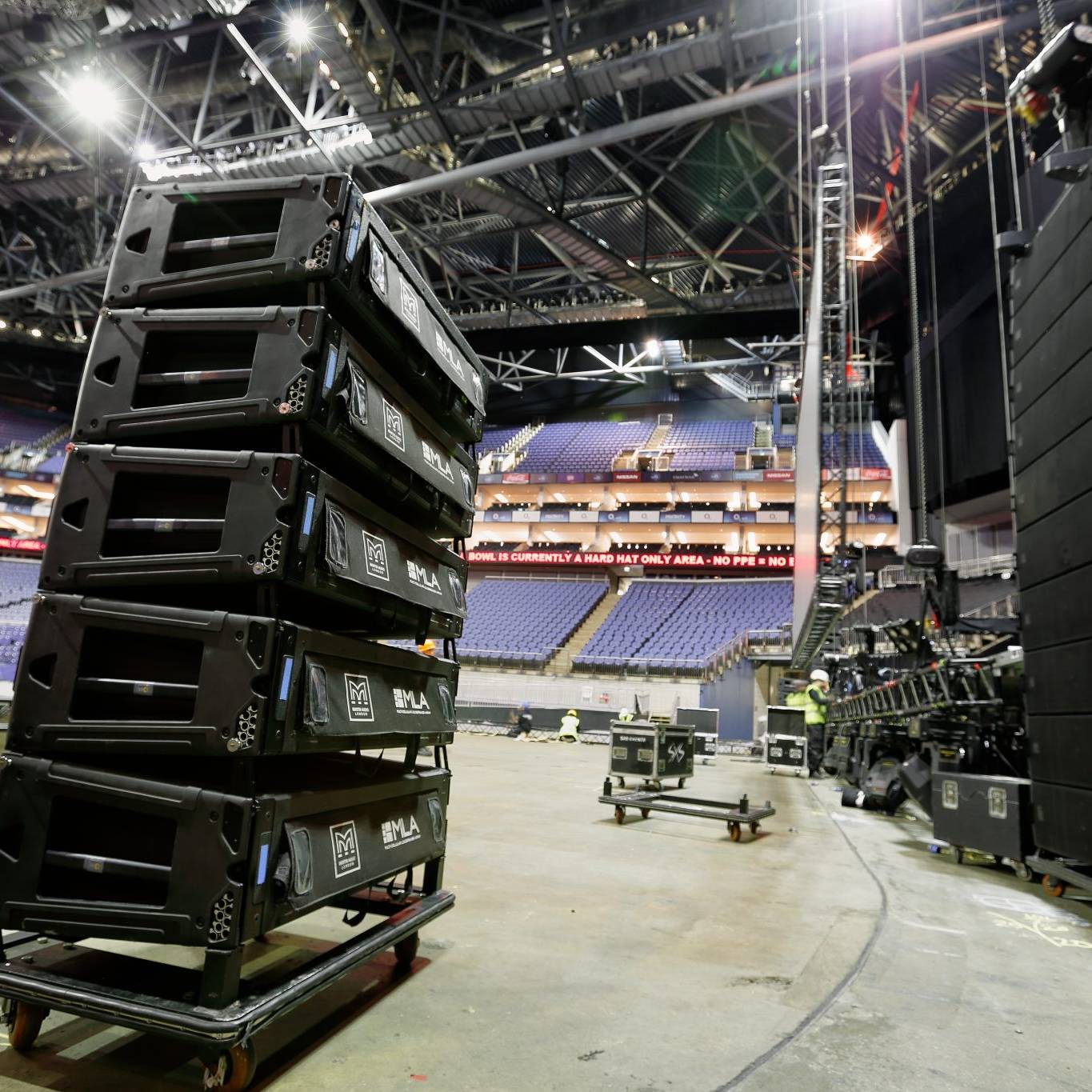
They come into their own on events with high sound pressure levels, such as dance or concert events, and work best alongside black wool serge. Mass and absorption doing different jobs.
Proper System Design
This is typically the most important element of the whole acoustic picture, and the most overlooked.
Too often a large system sits by the stage and has to run very loud to cover the audience area. The louder it runs, the more reverberation it generates - so the room fights itself.
Distributed systems with time delays remove that. Coverage improves, intelligibility improves, and total acoustic energy in the space drops.
Treatment then has far less to do.
Getting Advice
For acoustic treatment or system design on your event, talk to Premier Live on 0116 202 9953.
Tell us about your event.
Fill in the form and we'll come back to you quickly, not with a generic auto-reply, but with something useful.
Prefer a call? Book a 20-minute discovery call at a time that suits you.
Rather email? info@premier-ltd.com. Or just ring us: 0116 202 9953.
Once we hear from you, we'll set up a quick call to understand your brief properly, no lengthy questionnaires, no sales pitch.
We typically respond within two hours on working days.
EXPERIENCED. DEPENDABLE. HANDS-ON. UNFLAPPABLE
The people behind Premier Live
These are our people - the production managers, technicians, show-callers and crew who plan your event and run the room on the night. The same team from first site visit to final cue.

What We've Been Up To.
A look at the events we've delivered, the brief, the build, and how it ran on the night. Worth a read.