The Rundown
Topics: Building Illumination, Projection | 4 min read
Building illumination has moved a long way in a short time. The technology now allows shows, colour and movement that simply were not possible a decade ago.
Buildings are no longer bathed in a single colour. Designers work with multiple colours, patterns and motion to build something closer to a performance than a floodlight.
The technical expertise matters, but so does the artistic vision. Every scheme should be bespoke to the building and to the vantage points it will actually be seen from - a facade that looks extraordinary from the square can be invisible from the road.
Three techniques do most of the work: architectural lighting, video mapping and interactive lighting. Here is what each one offers.
Architectural Lighting
The Foundation
This is the most fundamental form of building illumination, and done well it remains one of the most effective.
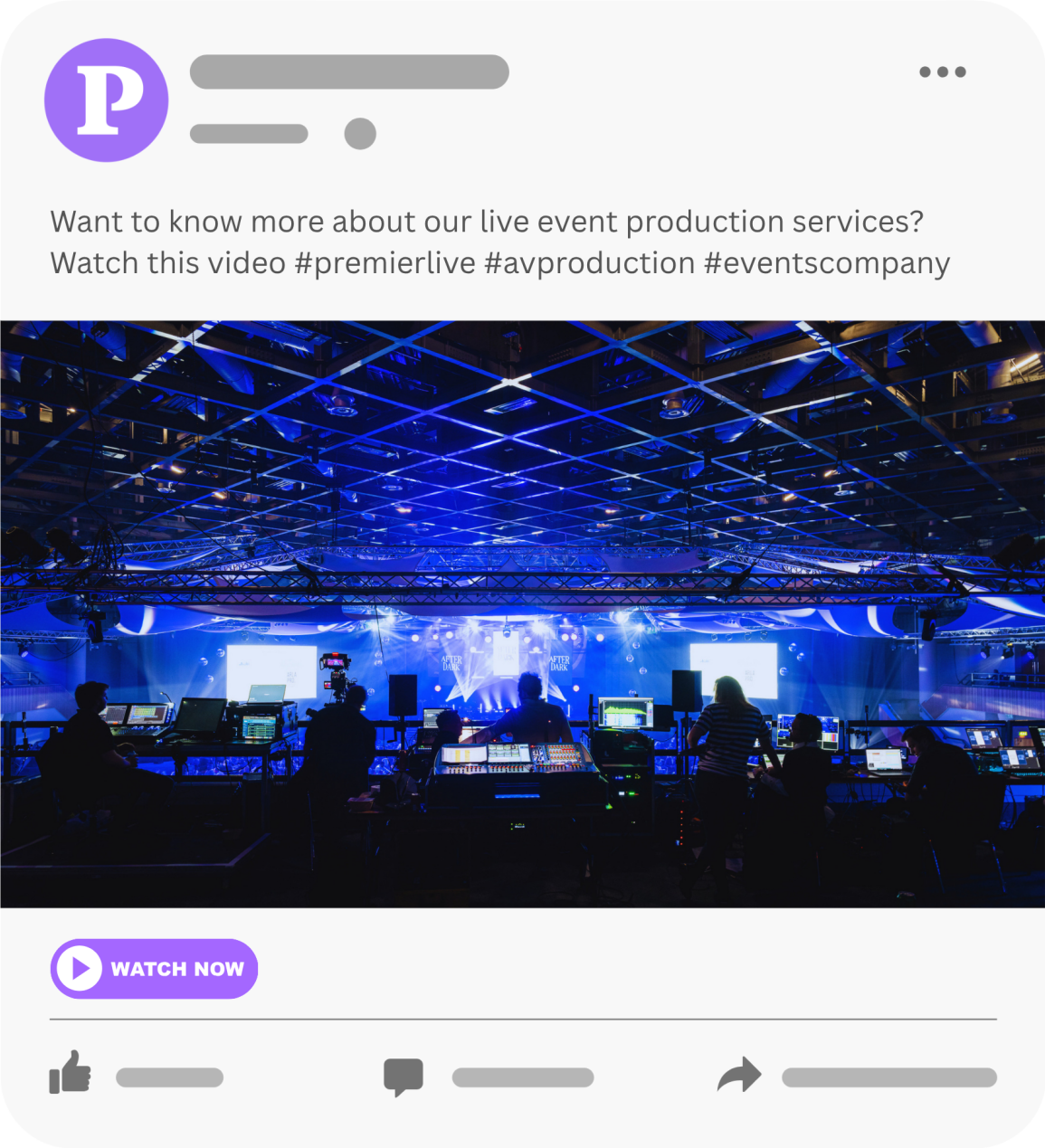
It means placing fixtures strategically around a structure to pick out its architectural features - columns, arches, facades. By controlling intensity and colour carefully, you create depth and texture that simply is not visible during the day.
It can be used to accentuate what makes a building distinctive, or conversely to give a uniform appearance across a structure that reads as fragmented in daylight.
Adding Movement
Premier Live also works with LED and laser technology to create dynamic and interactive architectural displays.
Incorporating motion sensors and similar elements lets the public become part of the show, giving each person a slightly different experience of the building.
This works particularly well for generating attention around a launch or a seasonal event, and for drawing crowds to a building that would otherwise go unnoticed after dark.
Planning It
Sightlines decide everything. Establish where the building will be viewed from, and at what distance, before deciding where fixtures go. A scheme designed on elevation drawings rarely survives contact with the actual street.
Video Mapping
What It Is
Video mapping projects images and video onto a building's surface, accounting for its three-dimensional shape.
Rather than a flat rectangle of picture, the content is mapped to the contours of the structure - windows, ledges, columns and recesses all become part of the canvas.
What It Can Do
The effects are genuinely striking. Mapping can tell an immersive story across a facade, present abstract art at architectural scale, or appear to transform or dismantle the building entirely.
Done well it changes how a building is perceived, and it produces the kind of spectacle people photograph and share.
What It Requires
Mapping is the most demanding of these techniques. It needs accurate survey data of the building, content created specifically for that geometry, sufficient projector throw and brightness for the surface and ambient light, and somewhere to put the projectors with clear sightlines.
None of that is a reason to avoid it. It is a reason to start early.
Premier Live has delivered mapping across everything from private events to large public spectacles, and can advise on feasibility before you commit to a concept.
Interactive Lighting
Buildings That Respond
Interactive lighting takes architectural lighting further by letting the building react to its surroundings in real time.
Sensors detect motion, sound, or even weather conditions. Connect those to the lighting system and the result is a display that evolves continuously and is never quite the same twice.
Why It Works
Interaction creates a connection between a building and the people around it. Instead of watching a show, passers-by influence it - and that shifts a landmark from something observed to something participated in.
For city centres and public spaces, that can be a genuine tool for engagement and for building a sense of ownership in a place.
Scale
It works at every size, from a single installation at a corporate event through to a city-wide lighting festival. The technology scales more readily than most people assume.
Talk to Us
Premier Live works on building lighting across the full range, from small private events to large public spectacles.
If you have a concept that does not fit neatly into any of the above, get in touch anyway - most of the interesting projects start that way.
Tell us about your event.
Fill in the form and we'll come back to you quickly, not with a generic auto-reply, but with something useful.
Prefer a call? Book a 20-minute discovery call at a time that suits you.
Rather email? info@premier-ltd.com. Or just ring us: 0116 202 9953.
Once we hear from you, we'll set up a quick call to understand your brief properly, no lengthy questionnaires, no sales pitch.
We typically respond within two hours on working days.
EXPERIENCED. DEPENDABLE. HANDS-ON. UNFLAPPABLE
The people behind Premier Live
These are our people - the production managers, technicians, show-callers and crew who plan your event and run the room on the night. The same team from first site visit to final cue.
























What We've Been Up To.
A look at the events we've delivered, the brief, the build, and how it ran on the night. Worth a read.